Understanding Tucker Carlson’s Background
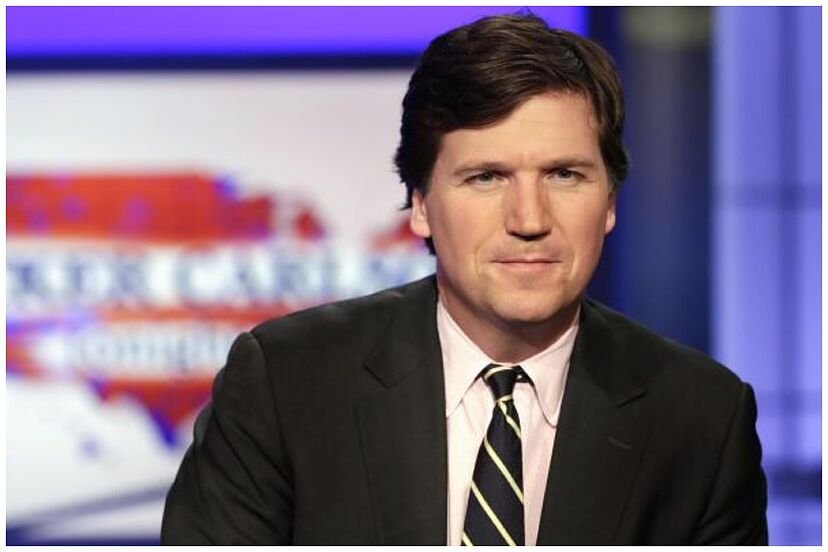
Tucker Carlson was born on May 16, 1969, in San Francisco, California, to a family that was already connected to influential societal circles. His father, Dick Carlson, served as a news anchor and later as the president of the Corporation for Public Broadcasting, while his mother, Lisa McNear, was a prominent artist. This familial background undoubtedly placed Carlson in a unique position, characterized by privilege and exposure to various social and political ideologies.
Raised in a predominantly comfortable environment, Carlson attended prestigious institutions. He completed his high school education at St. George’s School in Rhode Island, a private establishment known for its rigorous academic standards and networking potential. Following this, he pursued higher education at Trinity College in Hartford, Connecticut, where he graduated with a degree in history. The influence of distinguished educational institutions has significantly shaped his worldview and understanding of media dynamics, nurturing his analytical capabilities that are now evident in his journalism.
The socio-economic conditions of Carlson’s childhood and adolescence instilled in him a perspective that leans towards traditional values and skepticism of government interventions regarding individual liberties. His relationships with influential figures throughout his youth further solidified his career path and established him as a notable commentator on significant contemporary issues. It is important to recognize that his privileged background and connections may have contributed to his visibility in media circles, making Tucker Carlson a recognizable figure in discussions regarding inheritance and its implications on personal ideologies.
The Financial Legacy: What Tucker Carlson Inherited
Tucker Carlson, a prominent media personality and political commentator, carries a considerable financial legacy that has shaped his career trajectory and public persona. Born into a family with substantial means, his inheritance includes a mix of tangible assets and intangible benefits that have significantly influenced his pathway into the realms of journalism and politics.
One of the notable aspects of Tucker Carlson’s inheritance is his family’s wealth derived from various investments and properties. His father, Richard Warner Carlson, was a former director of Voice of America and a prominent figure in the media sector, which afforded Tucker a more privileged access to influential networks. The connections and resources available to him undoubtedly provided a foundation that many aspiring journalists might not have had.
Beyond mere financial assets, Tucker’s inheritance encapsulates an extensive cultural capital that permeates his professional undertakings. The Carlson family’s affluence has allowed him to cultivate an image of authority and success, attributes that resonate well in media hierarchies. Such privileges may have facilitated various opportunities, including an elite education at prestigious institutions, which have further propelled his ascent in media channels.
This combination of wealth and strategic positioning within influential circles has sparked discussions about the impact of inherited wealth on public perception. Critics often argue that individuals like Carlson, who benefit from familial legacies, may not fully grasp the challenges faced by ordinary citizens. Nevertheless, Tucker Carlson’s financial inheritance has played a pivotal role in crafting not only his media narrative but also his alignment with certain sociopolitical ideologies.
In conclusion, Tucker Carlson’s inheritance encompasses a multifaceted blend of financial resources and cultural influences, shaping both his career and the general public’s perception of wealth in the media and political arenas. The implications of such a background warrant further examination as they reveal broader societal patterns regarding inheritance and opportunity.
The Influence of Wealth on Media Personality
In contemporary media, the influence of wealth is a topic often cloaked in complexity, and the case of Tucker Carlson serves as a pertinent example. Carlson’s privileged background, marked by his inherited wealth, is believed to play a significant role in shaping his perspectives and, consequently, his media output. When we examine media personalities like Carlson, who has benefitted from tucker carlson inheritance, it prompts a broader discussion about the implications of inherited wealth on public discourse and societal narratives.
Wealth can immediately establish a separation between individuals and the general populace, creating a set of values and experiences that are distinct. This divergence can lead to a media personality’s viewpoints being perceived as insulated from the realities faced by ordinary citizens. Critics argue that figures such as Carlson may unintentionally propagate a narrow view of societal issues, one that often favors the wealthy. Such critiques raise compelling questions about accountability among public figures whose opinions influence large audiences.
Conversely, there are defenses for inherited wealth that emphasize the unique perspectives that come with privilege. Proponents suggest that Carlson’s wealth allows him to engage with a variety of issues without the constraints that often accompany financial insecurity. This perspective posits that individuals like Carlson, who possess leverage through their wealth, can promote discourse that might otherwise remain unexamined. Nevertheless, the challenge remains in balancing these discussions with an acknowledgment of the gap between the privileged and those facing adversity.
In comparing Carlson to other media personalities who have similarly benefitted from their own inheritances, it becomes evident that wealth plays a profound role in how viewpoints are formed and expressed. The intersection of tucker carlson inheritance with media representation exemplifies the need for critical scrutiny in understanding both privilege and accountability within public platforms. While wealth may afford access to influential positions, it also obliges media figures to consider the broader implications of their narratives on society.
Public Reaction and Controversies
The public reaction to Tucker Carlson’s inheritance has elicited a wide spectrum of responses, often framing the discussion around issues of privilege, bias, and accountability in the media. Carlson, a prominent media figure, has faced scrutiny regarding his upper-class background, which many argue has shaped his perspectives and reporting style. This criticism frequently surfaces in discussions around his stances on various socio-economic issues, prompting questions about how personal wealth influences a public figure’s credibility.
Several controversies linked to Carlson’s remarks on wealth inequality have further intensified the discourse. Critics often highlight instances where his comments seem disconnected from the realities faced by the less affluent, arguing that his inherited wealth creates a barrier to truly understanding the struggles of ordinary citizens. Social media platforms serve as hotbeds for these discussions, where many users actively challenge Carlson’s viewpoints and draw attention to what they perceive as an inherent bias stemming from his financial background.
Carlson’s stance on issues like immigration, social safety nets, and economic policies have frequently been met with backlash, much of which is fueled by his perceived detachment from the everyday experiences of Americans who do not share his privileged lineage. Supporters, on the other hand, often argue that his wealth affords him a unique perspective that can provide valuable insights. This division underlines the essential debate surrounding personal background and its implications in shaping public opinion.
As a result, public reaction to Tucker Carlson’s inheritance underscores the complexities of media accountability and bias. The dialogues generated around his background not only reflect individual perceptions of privilege but also challenge broader narratives within the media landscape, illustrating the intricate dynamics between wealth, power, and influence in society.