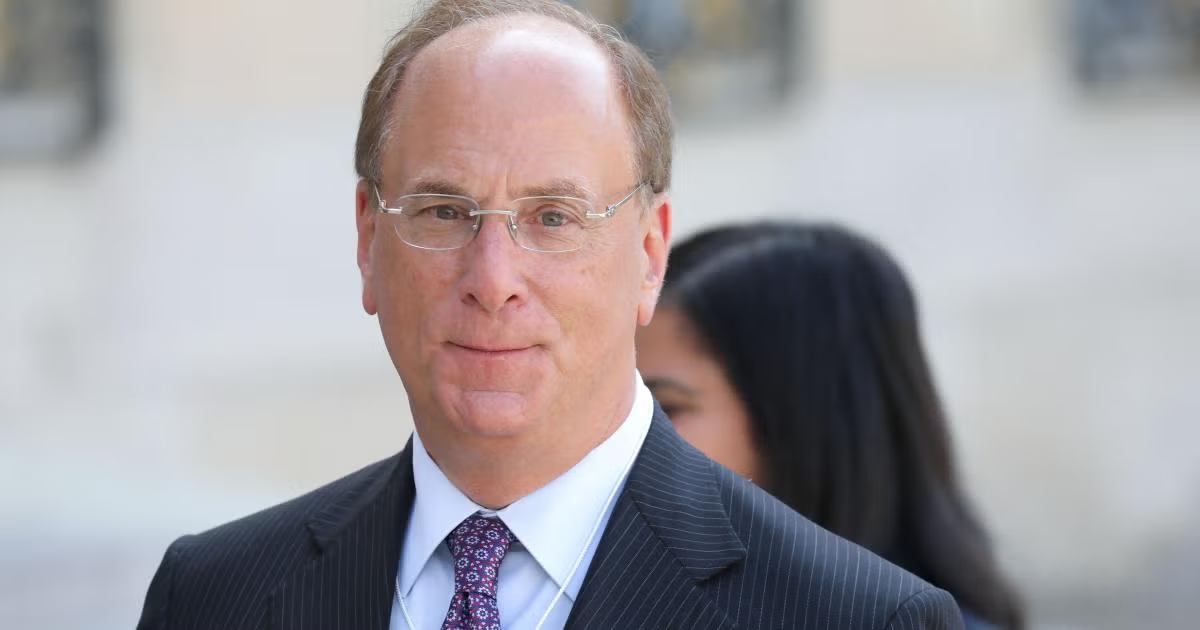
An Overview of Larry Fink’s Background
Larry Fink, a prominent figure in the finance industry, has a multifaceted background that deeply informs his worldview, including his perspectives on spirituality and religion. Born in 1952 in Van Nuys, California, Fink was raised in a Jewish household that emphasized the importance of education and ethical behavior. His upbringing under the guidance of his parents, both of whom played significant roles in his early life, instilled in him values that resonate with both professional and personal integrity.
Fink pursued higher education at the University of California, Los Angeles (UCLA), where he obtained a Bachelor of Arts in Political Science. He later attended the Graduate School of Business at Columbia University, earning an MBA. This academic foundation not only equipped him with technical skills necessary for his career but also provided him with a broader understanding of societal structures and ethical frameworks, which are often intertwined with one’s religious beliefs.
Throughout his career, Fink has held numerous prestigious positions, including the co-founder and CEO of BlackRock, the world’s largest asset manager. His professional trajectory has molded his understanding of financial systems and their implications on global communities. The interactions he has had throughout his career with diverse cultures and belief systems have further enriched his own spiritual journey.
Fink’s experiences have led him to ponder the deeper implications of wealth management and social responsibility, considering how one’s larry fink religion intersects with corporate governance and philanthropy. His stance on corporate social responsibility reflects a nuanced understanding of how spirituality can influence business practices. The formative experiences of Fink’s early life, education, and career endeavors offer a significant backdrop for grasping his religious views and the way they manifest in his professional conduct.
The Role of Religion in Larry Fink’s Life
Religion has had a significant influence on Larry Fink’s life, both personally and professionally. As the CEO of BlackRock, Fink operates within a high-stakes financial environment, yet his spiritual compass shapes his decision-making processes and ethical frameworks. Fink’s Jewish upbringing provided him with a strong foundation of values that guide his practices in business and philanthropy. His commitment to integrity and social responsibility is deeply rooted in his religious background.
Throughout his career, Fink has acknowledged the role that his faith plays in his life. He often cites the teachings he grew up with, emphasizing the importance of community and social welfare in his corporate philosophy. His Jewish identity is not merely a cultural artifact; it serves as a motivator for engaging in philanthropy and social issues. For instance, Fink has been a vocal advocate for sustainable investing, seeing it as a moral obligation alongside a business imperative. This commitment is inspired by the ethical principles found in many religious texts, highlighting a sense of duty towards future generations.
Moreover, influential figures in Fink’s life, such as his family and community leaders, have shaped his understanding of spirituality. These relationships have reinforced his belief that businesses must prioritize societal well-being alongside profit. Events that have challenged his views and confronted him with adversity have often led Fink to reflect on his religious beliefs, further solidifying his approach to leadership. As a leader, Fink incorporates these spiritual insights into the values he instills at BlackRock, which helps to cultivate a workplace culture that encourages responsibility, inclusivity, and community service.
Larry Fink’s Public Statements on Religion
Larry Fink, the CEO of BlackRock, has made several noteworthy public statements regarding religion, which offer significant insights into his worldview and ethical framework. Throughout his career, Fink has demonstrated a profound understanding of the intersection between spirituality, morality, and business practices. He has often emphasized the importance of values-based leadership, asserting that ethical considerations should guide corporate decisions.
In various interviews, Fink has articulated his belief in the necessity of corporate responsibility and social impact. He has been quoted saying that companies should not only focus on profits but also consider their contributions to society and the well-being of future generations. This perspective echoes the principles found in many religious teachings that advocate for stewardship and responsibility towards one’s community. Fink’s viewpoint suggests that his personal beliefs may align with a broader understanding of morality rooted in spiritual traditions.
Moreover, Fink has referenced the idea of purpose-driven business models, which reflect a growing trend in corporate America that seeks to blend profitability with a sense of purpose. By advocating for businesses to adopt a more ethical compass, he indirectly touches upon themes commonly addressed in religious discourse, such as integrity, compassion, and the quest for a greater good.
Fink’s speeches often highlight the importance of aligning corporate strategies with societal values. He encourages leaders to consider the ethical implications of their decisions, a sentiment that resonates with various religious doctrines that promote ethical behavior and social responsibility. As the CEO of a major investment firm, Fink’s calls for a values-driven approach may signal a shift in how business leaders perceive their roles in society.
The Impact of Larry Fink’s Religion on His Leadership and Advocacy
Larry Fink’s religion plays a significant role in shaping his leadership style and his advocacy for corporate responsibility within the financial sector. As the CEO of BlackRock, Fink has established himself as a proponent of sustainability and social justice, aligning closely with the principles that often govern religious views on stewardship and ethical conduct. His beliefs have led him to advocate for environmental, social, and governance (ESG) criteria as essential components of investment strategies, reflecting a commitment not just to profits but to broader societal well-being.
Fink’s approach intertwines his spiritual beliefs with corporate strategies, promoting a vision that emphasizes responsible investing. For instance, he often highlights the moral imperative businesses have regarding climate change and resource management. This intersection of spirituality and business translates into influential policy recommendations aimed at integrating sustainability into core business practices. Such strategies resonate with many stakeholders who value corporate contributions to societal challenges, aligning business success with social equity and environmental stewardship.
Moreover, Larry Fink’s religion informs his perspective on leadership by fostering a sense of accountability. He argues that businesses must answer not only to shareholders but also to a wider community affected by their actions. This notion is deeply rooted in the values associated with his faith, advocating a sense of duty to others and creating a ripple effect through the corporate landscape. The impact of his spiritual compass is evident in BlackRock’s initiatives that prioritize transparent communication and corporate citizenship, encouraging other leaders to adopt similar frameworks in their operations.
In conclusion, Fink’s religious beliefs significantly influence his leadership and advocacy in the financial sector. His commitment to corporate responsibility, sustainability, and social justice illustrates how his spirituality informs business practices and policy directions, ultimately impacting the broader business world for the better.